


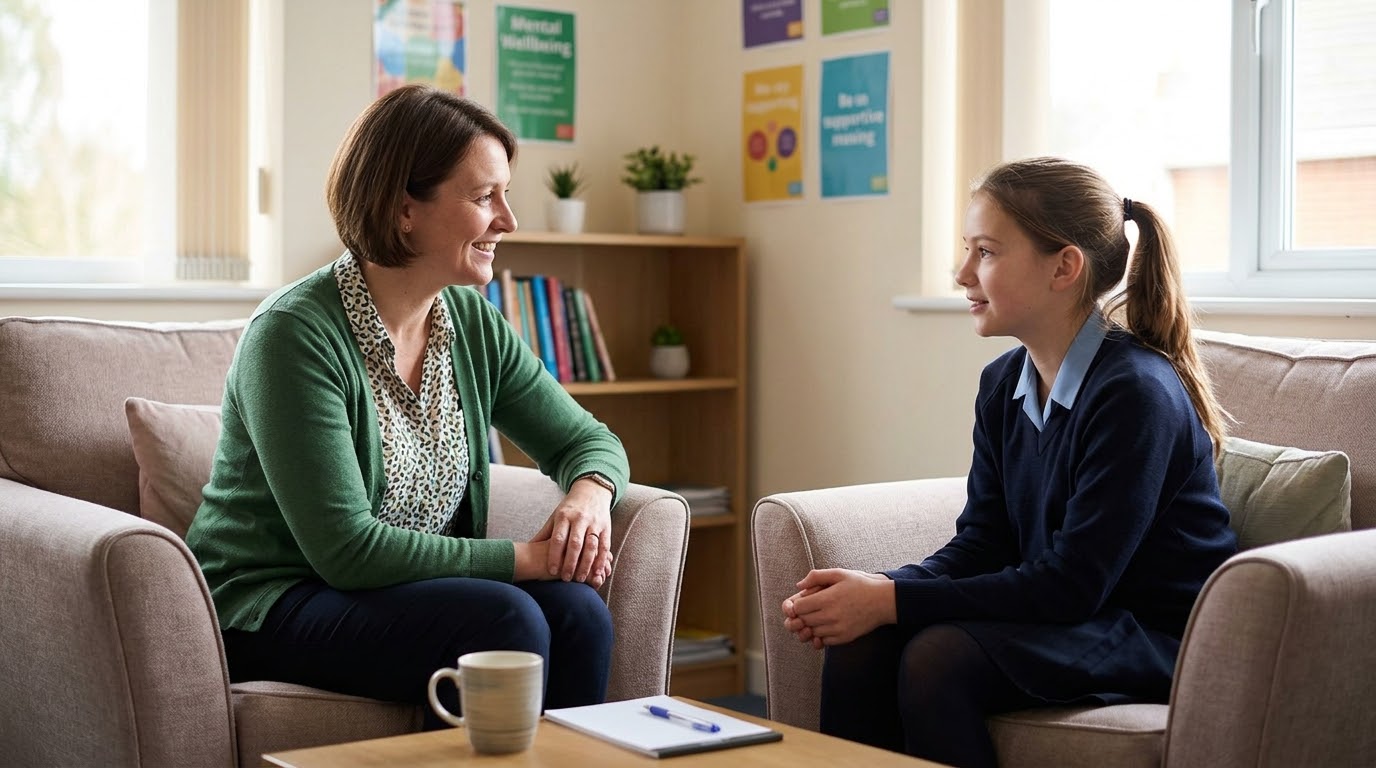
Introduction: Why This Matters Right Now
Self-harm among young people is not a rare or edge-case concern. In English secondary schools, research puts lifetime prevalence at around 13% of teenagers — meaning in a class of 30, it is statistically likely that at least three or four students have self-harmed at some point. And that figure only accounts for those who self-report.
For school staff, this is becoming more urgent than ever. In July 2025, the Department for Education published updated statutory RSHE guidance, effective from September 2026, which places a new emphasis on whole-school mental health — explicitly including suicide prevention planning and ensuring staff have the knowledge and skills to respond. For many teachers and TAs, that will feel daunting — and understandably so.
Research confirms that the majority of school staff currently lack confidence when it comes to talking about self-harm. A survey of 153 schools found that 81% cited inadequate training as a barrier to addressing it. When staff do not know what to say, they can inadvertently react in ways that damage the relationship — and, worse, reduce a young person's willingness to seek help in the future.
This article will not turn you into a therapist. But it will give you the practical, evidence-based knowledge to respond calmly and helpfully — and to know when and how to pass the baton to the right people.
What Self-Harm Is (and What It Is Not)
Self-harm means intentionally hurting one's own body, usually as a way of managing overwhelming emotional distress — not as an attempt to end one's life. The most common forms include cutting, scratching, burning, and hitting. It often happens in private and may leave marks that young people try to cover.
What self-harm is NOT:
- A bid for attention (though it may be a bid for connection)
- Manipulative behaviour
- Something that will automatically get better if you ignore it
- Something only teenagers do — it can begin in primary school
One of the most harmful myths is that talking about self-harm will put ideas into young people's heads. Research does not support this. Staff who avoid the topic out of fear of contagion may actually leave a young person feeling more alone and more likely to continue.
Warning Signs to Look Out For in the Classroom

Self-harm is deliberately kept hidden by most young people. You will not always see physical evidence, but there are behavioural and physical patterns worth knowing.
Physical signs:
- Wearing long sleeves or long trousers even in warm weather
- Unexplained cuts, bruises, or burns — particularly to arms, thighs, or stomach
- Multiple plasters or bandages in one area
- Scarring that seems to be in a pattern
Behavioural signs:
- Social withdrawal or becoming unusually secretive
- Sudden or unexplained changes in mood
- Lowering of academic grades
- Expressing feelings of hopelessness, failure, or worthlessness
- Risk-taking behaviour, drug or alcohol use
- Giving away possessions (a more serious warning sign)
It is important to remember that no single sign proves self-harm. Your role is not to diagnose — it is to notice, and to respond with warmth.
What to Say When a Young Person Discloses
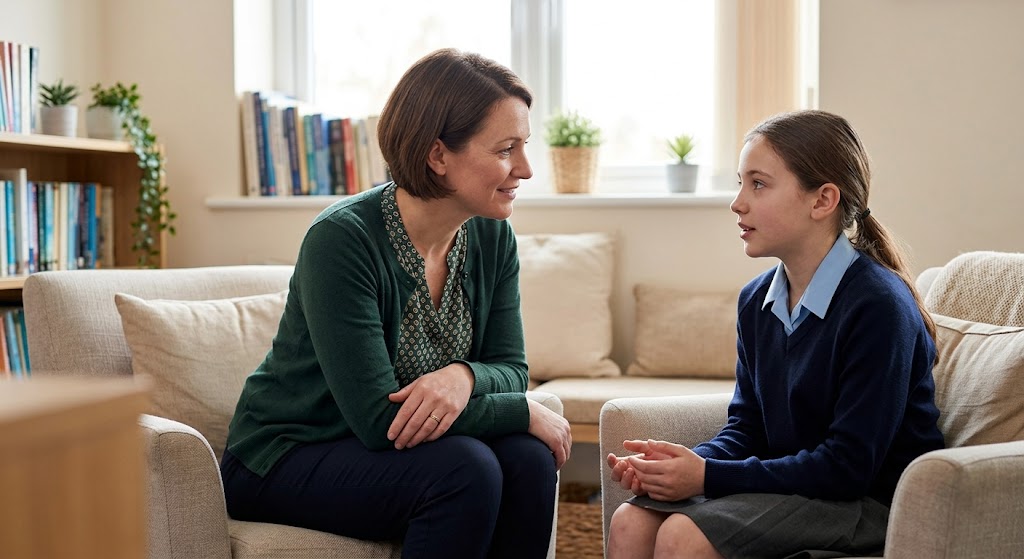
This is the moment most teachers dread. A young person tells you they have been hurting themselves. What do you say?
First: your initial reaction matters enormously. Research shows that when staff respond with shock, disgust, or alarm, young people are less likely to seek help again. The goal is to stay calm, non-judgemental, and present.
Do say:
- Thank you for trusting me with this — that took courage.
- I am really glad you told me. You do not have to go through this alone.
- Can you help me understand how you have been feeling?
- I want to make sure you get the right support.
Do not say:
- Why would you do that to yourself?
- But you have so much to be grateful for.
- You need to stop doing this.
- Are you doing this for attention?
- Do not tell anyone else about this.
Never ask the young person to show you their scars or describe the method. You do not need to have all the answers in that moment. Saying I am here, and I am going to make sure you get some proper support is enough.
Safeguarding Pathways: Who to Inform and When
Once a young person discloses self-harm — or you discover evidence of it — there is a clear pathway to follow.
- Stay calm and reassure the young person that you are taking what they have said seriously.
- Report to your DSL (Designated Safeguarding Lead) as soon as possible — ideally before the young person leaves the school site.
- Document what was said, by whom, and when. Record this in your school's safeguarding system (such as CPOMS) within 24 hours.
- Do not promise confidentiality. Be honest: explain that you may need to share information to keep them safe, but that you will always try to involve them.
- Do not contact parents yourself unless agreed with the DSL — there are situations where informing parents immediately could increase risk.
If a young person requires immediate first aid because they have hurt themselves at school, treat the wound and involve the school medical officer, then follow your safeguarding procedure. Never leave a young person in a medical situation alone. If any mention of suicidal thoughts or intent is made, treat this as a matter of urgency and report to the DSL immediately.
Your Role vs. the DSL's Role: Keeping the Boundaries Clear
One of the common and understandable challenges teachers face is the blurring of roles. A young person has confided in you, and you want to support them. But your role has limits — and that is a feature, not a failure.
Your role as a teacher or TA:
- Listen, validate feelings, and reassure
- Report promptly to the DSL
- Continue to offer a warm, consistent relationship in school
- Monitor and note any further changes in mood or behaviour
The DSL's role:
- Take the lead on managing ongoing support
- Decide on parental contact and timing
- Refer to CAMHS, Early Help, or MASH where appropriate
- Coordinate with the pastoral team and outside agencies
Trying to manage this yourself — keeping secrets, offering ongoing counselling, or becoming the young person's sole support — puts both you and the young person at risk. It is a kindness to pass it on properly.
Looking After Yourself

Being on the receiving end of a self-harm disclosure can be genuinely distressing. Feelings of shock, helplessness, sadness, and even guilt are common — and they are valid.
Schools have a responsibility to support staff as well as pupils. After a difficult disclosure:
- Tell a trusted colleague or your line manager how you are feeling.
- Ask your DSL or SLT what debrief or supervision is available.
- Do not carry it alone outside school — access your employee wellbeing support if your school provides it.
- Remember: you did the right thing by listening.
Self-harm disclosures can stay with you. That is a sign you care — not a sign you have done something wrong.
Frequently Asked Questions
Will talking about self-harm encourage more young people to do it?
The evidence does not support this concern. Research on social contagion in self-harm produces mixed results, and there is little evidence that asking students about self-harm causes new self-harm behaviour. Silence tends to increase shame — which makes things worse, not better.
Should I tell the student's parents straight away?
Not necessarily, and not alone. Always refer to your DSL first. In some cases, informing parents immediately could put the young person at greater risk. The DSL will make this decision in line with your school's safeguarding procedures.
What if a young person asks me to keep it secret?
Be honest with them: explain that you care about them too much to promise that, and that some information needs to be shared to keep them safe. You can reassure them that only the people who need to know will be involved, and that you will try to involve them in decisions.
The young person says it is not a big deal. Should I still report it?
Yes. Self-harm — even when described as minor — should always be reported to the DSL. Young people often minimise the behaviour to protect themselves or others. Your job is to report, not to assess severity.
Build Your Confidence With Free CPD
Understanding how to respond to self-harm is one of the most valuable skills any educator can develop. TeachHQ's free CPD course on Understanding Self-Harm Among Young People is built specifically for teachers, TAs, and school support staff. It covers the causes and nature of self-harm, how to respond to disclosures, and how to look after your own wellbeing in the process.
You might also find these free TeachHQ courses helpful:
- Mental Health Awareness — understanding the broader mental health landscape in schools
- Referring to Early Help in Education — knowing when and how to make a referral
All courses are free to access. No payment card needed. Create your free TeachHQ account and start learning today.